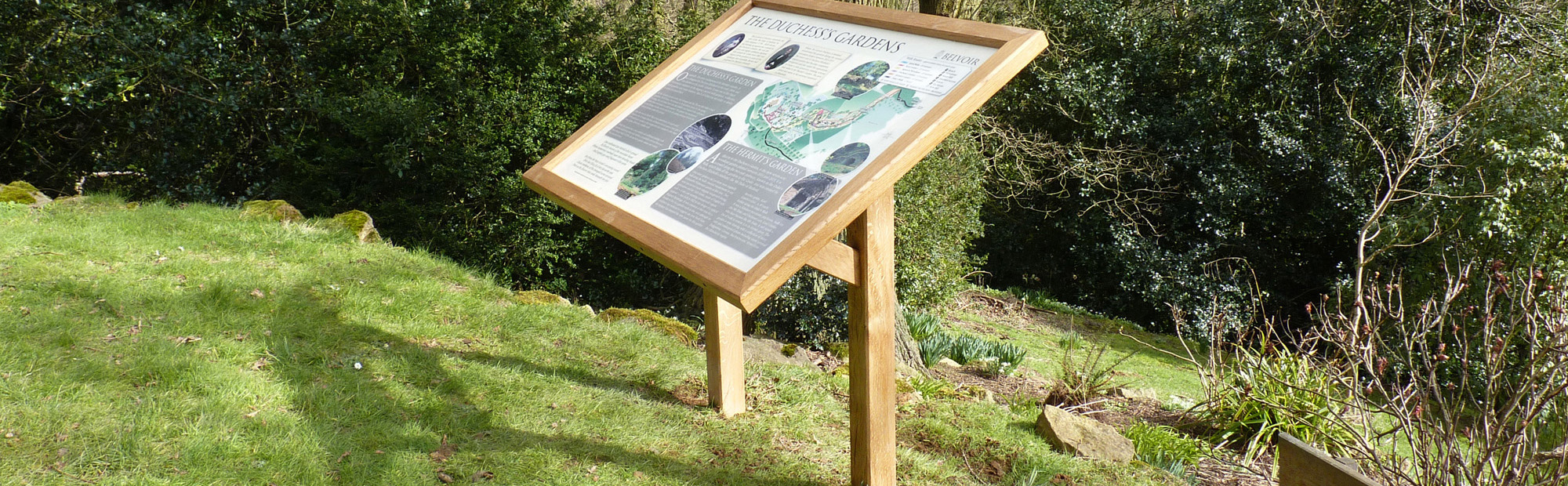


Choosing the right material for outdoor interpretation signs is essential for ensuring durability, legibility and long-term value. Interpretation signage is often installed in exposed environments such as nature reserves, parks and heritage sites, so materials must withstand weather, wear and vandalism while complementing the surrounding landscape.
Common materials used in outdoor interpretation signage
Oak
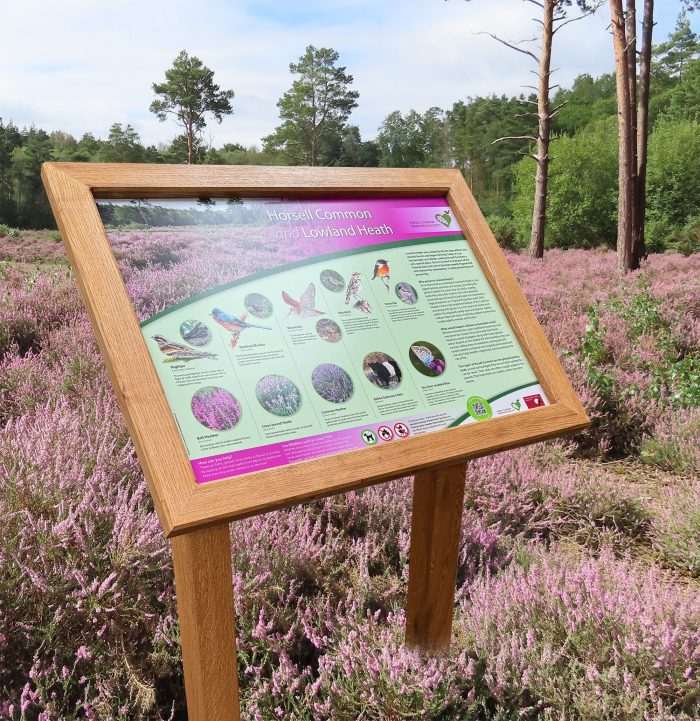
Oak is a popular choice for lecterns, fingerposts and waymarkers, offering a timeless, traditional appearance that blends naturally into heritage sites and countryside environments. Its strength and density make it exceptionally durable, capable of withstanding the effects of weather, wear and daily public use. When sourced responsibly, oak is also a sustainable option and can last for decades with minimal maintenance.
As the timber ages, it develops a natural silver-grey patina that enhances its character and allows it to sit comfortably within rural landscapes. Oak can be left untreated for a natural finish or sealed with protective oils to preserve its original colour. This versatility, combined with its long lifespan and visual appeal, makes oak an ideal material for high-quality, long-term outdoor signage projects.
Recycled Plastic
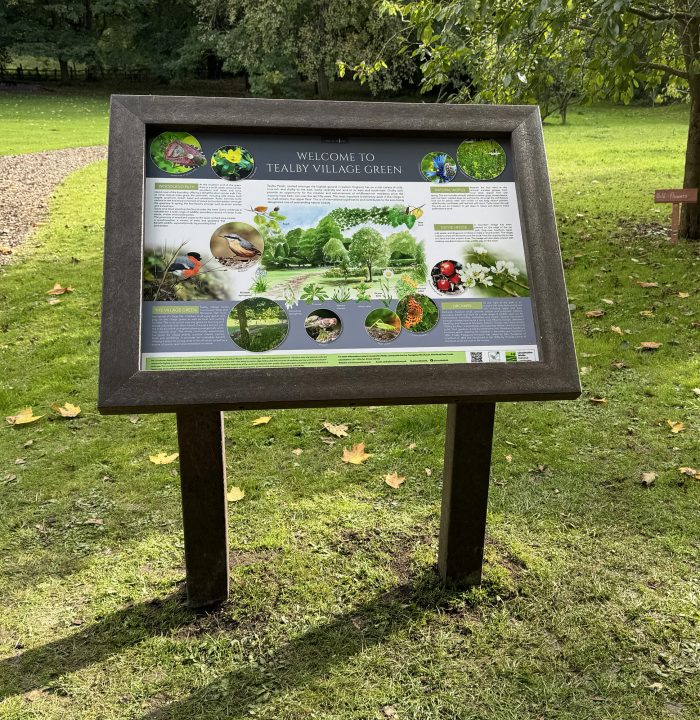
Recycled plastic is highly resistant to rot, moisture and insect damage, making it an excellent choice for wetland locations and exposed environments. Unlike timber, it will not warp, crack or splinter, ensuring a long service life with very little maintenance required. This makes it particularly suitable for sites where regular upkeep is impractical or costly.
Manufactured from 100% recycled plastic, this material actively supports sustainability goals by diverting waste from landfill and giving it a new, long-lasting purpose. While it does not have the natural character of timber, its durability and low-maintenance performance make it a practical and environmentally responsible option for outdoor signage and structures.
Steel and Aluminium
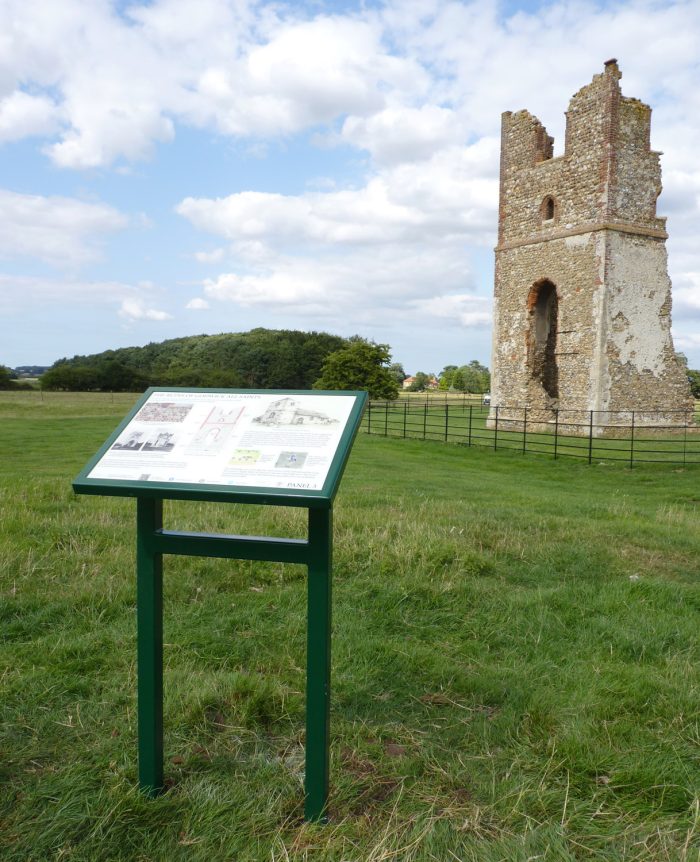
Galvanised steel, stainless steel and aluminium are ideal materials for high-traffic locations where strength and durability are essential. They offer excellent resistance to impact, corrosion and weathering, making them well suited to public spaces, coastal environments and urban settings. These metals provide a clean, contemporary finish that works equally well in modern and heritage contexts.
Commonly used for interpretation panels and information boards, steel and aluminium deliver reliable long-term performance with minimal maintenance. Protective coatings
and finishes, such as powder-coating, further enhance durability while allowing for a wide range of colours and design options. This versatility ensures each installation can be tailored to suit its surroundings while maintaining a professional, long-lasting appearance.
Choosing the right combination
Often, the best solution is a combination of materials — for example, an oak lectern paired with a durable Durapanel (printed aluminium) graphic panel. This approach balances visual appeal with long-term performance, ensuring the structure complements its surroundings while the panel remains crisp, weather-resistant and easy to maintain.
Selecting the right materials from the outset helps ensure your interpretation signage stays attractive, readable and effective for many years to come, even in demanding outdoor environments.
If you’re planning outdoor interpretation signage and would like guidance on choosing materials that balance durability, sustainability and visual impact, our team is always happy to offer advice tailored to your site and project requirements.